
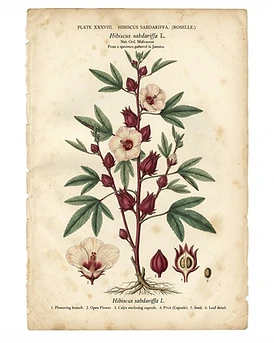
Hibiscus sabdariffa
Hibiscus
Malvaceae
Identity
- Common Name
- Hibiscus
- Scientific Name
- Hibiscus sabdariffa
- Botanical Family
- Malvaceae
- Native Region
- West Africa and tropical Asia
- Cultivation Regions
- West Africa, Egypt, Mexico, Caribbean, India
- Plant Parts Used
- Calyces (sepals), Flowers
- Synonyms
- Roselle, Sorrel, Jamaica Flower
- Caffeine Level
- Caffeine Free
An annual shrub 1.5–3 m tall with lobed leaves, pale yellow-pink hibiscus flowers, and the characteristic fleshy deep crimson calyces (sepals) that are harvested and dried to make the tart red beverage.
Historical Background
Hibiscus tea (karkadeh, bissap, agua de Jamaica, sorrel drink) has been a ceremonial and everyday beverage across West Africa, Egypt, the Caribbean, and Latin America for centuries, prized for its brilliant ruby color, tart flavor, and cooling reputation.
Earliest recorded uses: Ancient Egyptian and West African use; widespread as karkadeh in Egypt and North Africa.
Cultural significance: Hibiscus is the national drink of many countries — karkadeh in Egypt, bissap in Senegal, sorrel in the Caribbean — a festive, ruby-red symbol of hospitality and celebration.
Traditional preparations:
- Calyx infusion (cold or hot)
- Cold-brew 'sorrel'
Traditional Uses
These uses document historical traditions and do not imply proven effectiveness.
Middle Eastern Traditions
Cooling drink for hot climates and festive occasions; mild diuretic reputation.
Modern Herbalism
Taken for cardiovascular support (modest blood pressure).
Flavor & Aroma
Aroma: Crisp, fruity, cranberry-like
Tea Information
Safety & Cautions
Research Summary
Hibiscus is one of the better-studied beverage herbs. Several small-to-moderate trials suggest modest reductions in blood pressure in adults with mild hypertension, though effects are small and not a substitute for medication. Evidence for cholesterol and metabolic effects is limited and inconsistent. It is not a treatment for hypertension.
Evidence levels reflect the currently available scientific literature and may change as new research emerges. Where evidence is limited or conflicting, this is stated plainly.
References & Sources
Related Herbs


Althaea officinalis
Marshmallow Root
Malvaceae
Faint, sweet, earthy


Theobroma cacao
Cacao
Malvaceae
Rich, chocolate, earthy, slightly bitter


Malva sylvestris
Mallow
Malvaceae
Mild, green, slightly sweet, mucilaginous