
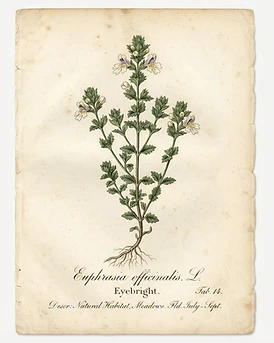
Euphrasia officinalis
Eyebright
Orobanchaceae
Identity
- Common Name
- Eyebright
- Scientific Name
- Euphrasia officinalis
- Botanical Family
- Orobanchaceae
- Native Region
- Europe and temperate Asia
- Cultivation Regions
- Europe, Asia, often wild-harvested (semi-parasitic)
- Plant Parts Used
- Aerial parts
- Synonyms
- Euphrasia, Eyebright Herb, Meadow Eyebright
- Caffeine Level
- Caffeine Free
A small, slender semi-parasitic annual with opposite tiny toothed leaves and little white tubular flowers veined with purple and bearing a yellow spot — by the 'doctrine of signatures' said to resemble an eye.
Historical Background
Associated with the eyes since the 14th century under the doctrine of signatures; a mainstay of European folk practice for eye discomfort and respiratory catarrh.
Earliest recorded uses: Eye compresses, colds, and nasal catarrh.
Cultural significance: The archetypal 'eye herb' of European folk medicine; later pressed into eyewash preparations.
14th century
European herbalists associate eyebright with eye complaints.
Modern
Used in eyewash and allergy-tea blends; limited clinical study.
Traditional preparations:
- Warm infusion (respiratory)
- Cool strained infusion (compress)
Traditional Uses
These uses document historical traditions and do not imply proven effectiveness.
Traditional European Herbalism
Cooled, filtered infusion as a compress for tired, irritated eyes; warm infusion for nasal catarrh and hay-fever.
Flavor & Aroma
Aroma: Faint, green and herbaceous
Tea Information
Safety & Cautions
Research Summary
Astringent tannins and iridoids may account for traditional use; controlled trials for eye conditions are lacking. Eye preparations carry contamination risks if not properly formulated.
Evidence levels reflect the currently available scientific literature and may change as new research emerges. Where evidence is limited or conflicting, this is stated plainly.
References & Sources
References & Sources
- American Herbal Products Association · Botanical Safety Handbook (2013)
Related Herbs

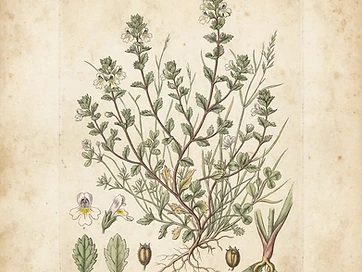
Euphrasia officinalis
Eyebright
Orobanchaceae
Mild, green, slightly bitter, herbal

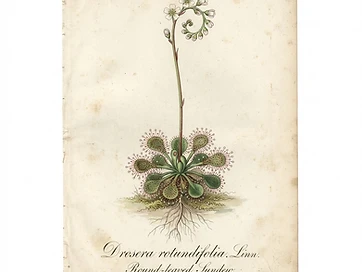
Drosera rotundifolia
Sundew
Droseraceae
Faint, green and earthy

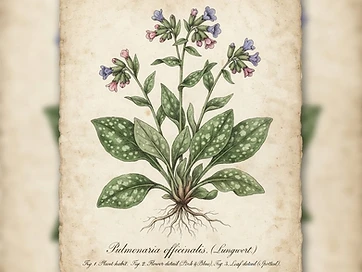
Pulmonaria officinalis
Lungwort
Boraginaceae
Faint, green and earthy