
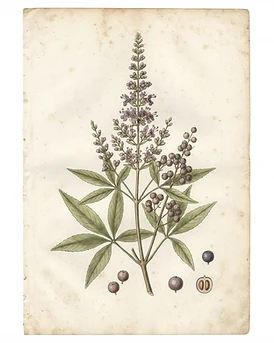
Vitex agnus-castus
Chasteberry (Vitex)
Lamiaceae
Identity
- Common Name
- Chasteberry (Vitex)
- Scientific Name
- Vitex agnus-castus
- Botanical Family
- Lamiaceae
- Native Region
- Mediterranean and central Asia
- Cultivation Regions
- Mediterranean, Europe
- Plant Parts Used
- Berries (fruit)
- Synonyms
- Chaste Tree, Monk's Pepper
- Caffeine Level
- Caffeine Free
A deciduous shrub or small tree 1–5 m tall with palmate, five-fingered leaves, slender spikes of lilac flowers, and small peppercorn-like dark berries with a peppery aroma. The berries are the medicinal part.
Historical Background
Chasteberry was used in ancient Greece and Rome for women's complaints and, by monks, to suppress libido (hence 'chaste' tree and 'monk's pepper'). In the 20th century European phytotherapy developed standardized extracts for premenstrual symptoms, and it is now a leading women's herb.
Earliest recorded uses: Dioscorides and Pliny describe vitex for women's conditions; medieval monasteries used the 'monk's pepper' berries.
Cultural significance: Vitex straddles ancient fertility rites and monastic chastity — the same berries sacred to Demeter were later named for monastic temperance — a striking duality preserved in its common names.
Traditional preparations:
- Berry tincture
- Decoction
- Standardized extracts
Traditional Uses
These uses document historical traditions and do not imply proven effectiveness.
Traditional European Herbalism
Berries for menstrual irregularity and premenstrual complaints.
Modern Herbalism
Extracts taken for premenstrual syndrome (PMS) symptoms.
Flavor & Aroma
Aroma: Peppery, slightly sweet, herbaceous
Tea Information
Safety & Cautions
Research Summary
Chasteberry has been studied for premenstrual syndrome (PMS) and premenstrual dysphoric disorder. Several trials suggest modest improvement in PMS symptoms compared with placebo or some active comparators, though quality varies. It is not a treatment for infertility, and effects on prolactin and hormones are not fully established.
Evidence levels reflect the currently available scientific literature and may change as new research emerges. Where evidence is limited or conflicting, this is stated plainly.
References & Sources
Related Herbs


Salvia rosmarinus
Rosemary
Lamiaceae
Strong, camphoraceous, woody


Satureja hortensis
Savory
Lamiaceae
Warm, peppery, piney, herbaceous


Origanum vulgare
Oregano
Lamiaceae
Warm, herbaceous, slightly spicy, aromatic