

Andrographis paniculata
Andrographis
Acanthaceae
Identity
- Common Name
- Andrographis
- Scientific Name
- Andrographis paniculata
- Botanical Family
- Acanthaceae
- Native Region
- India and Sri Lanka
- Cultivation Regions
- India, Sri Lanka, Southeast Asia, China
- Plant Parts Used
- Aerial parts, Leaves
- Synonyms
- Kalmegh, King of Bitters, Chuan Xin Lian
- Caffeine Level
- Caffeine Free
An erect slender annual 30-100 cm tall with opposite lance-shaped leaves, small tubular pink-white flowers in loose clusters, and narrow elongated seed pods; all parts are intensely bitter.
Historical Background
Known as the 'king of bitters' (kalmegh, chuan xin lian), andrographis has been a pillar of Ayurvedic, Siddha, and Chinese herbal traditions for upper-respiratory and seasonal use. Its intense bitterness became a marker of its traditional reputation for clearing heat.
Earliest recorded uses: Used in Ayurvedic and Siddha medicine for centuries; called the 'king of bitters.'
Traditional preparations:
- Aerial-part infusion
- Bitter seasonal tea with ginger & honey
- Short-term immune blend
Traditional Uses
These uses document historical traditions and do not imply proven effectiveness.
Ayurveda
Bitter cooling herb for colds, fever, and 'heat-clearing.'
Traditional Chinese Medicine
Clears Heat, detoxifies; seasonal respiratory herb.
Modern Herbalism
Short-term seasonal immune and respiratory tea.
Flavor & Aroma
Aroma: Strongly bitter, green, earthy, herbaceous
Tea Information
Safety & Cautions
Research Summary
Andrographis has moderate evidence from trials, mostly from Asia and Europe, for shortening symptoms of upper respiratory tract infections; evidence quality is variable. It is not a treatment for infection, and should not replace professional care; use short-term only.
Evidence levels reflect the currently available scientific literature and may change as new research emerges. Where evidence is limited or conflicting, this is stated plainly.
References & Sources
Related Herbs

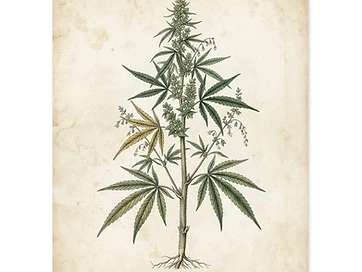
Cannabis sativa
Cannabis
Cannabaceae
Pungent, resinous, herbaceous


Prunella vulgaris
Self-Heal
Lamiaceae
Mild, slightly bitter, green, earthy


Scutellaria baicalensis
Baikal Skullcap
Lamiaceae
Mild, slightly bitter, green, earthy