


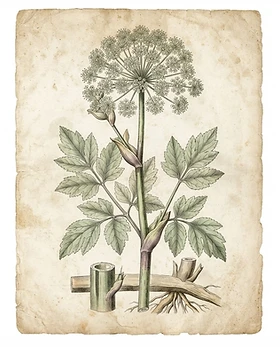
Angelica archangelica
Angelica
Apiaceae
Identity
- Common Name
- Angelica
- Scientific Name
- Angelica archangelica
- Botanical Family
- Apiaceae
- Native Region
- Northern Europe and Scandinavia
- Cultivation Regions
- Europe, Scandinavia, East Asia
- Plant Parts Used
- Root, Seeds
- Synonyms
- Garden Angelica, Norwegian Angelica, Holy Ghost
- Caffeine Level
- Caffeine Free
A tall robust biennial with large pinnate compound leaves of broad toothed leaflets, a thick hollow green-purple stem, and a large round umbrella-shaped cluster (umbel) of small pale green-white flowers; the root and seeds are used.
Historical Background
Angelica ('herb of the Holy Spirit') has been a revered Nordic and European protective and digestive herb for millennia, named for its archangelic reputation against plague. Its warm, musky roots and seeds brew a tonic tea traditionally sipped for digestion and winter warmth — used with care for phototoxicity.
Earliest recorded uses: European and Scandinavian traditions for millennia; a protective 'herb of the Holy Spirit' and a warming digestive.
Traditional preparations:
- Root decoction
- Digestive tonic tea
- Winter warming blend
Traditional Uses
These uses document historical traditions and do not imply proven effectiveness.
Traditional European Herbalism
Protective 'herb of the Holy Spirit' against plague.
Modern Herbalism
Warming digestive and winter tea.
Flavor & Aroma
Aroma: Warm, sweet, musky, celery-like
Tea Information
Safety & Cautions
Research Summary
Angelica has a tradition for digestion and winter warmth; preclinical work shows antispasmodic and antimicrobial activity. Clinical evidence is insufficient; it is not a treatment for digestive disorders, cold, or any disease, and furanocoumarins may cause phototoxicity and drug interactions.
Evidence levels reflect the currently available scientific literature and may change as new research emerges. Where evidence is limited or conflicting, this is stated plainly.
References & Sources
Related Herbs

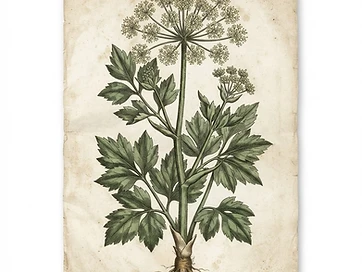
Levisticum officinale
Lovage
Apiaceae
Warm, celery-like, slightly musky, savory

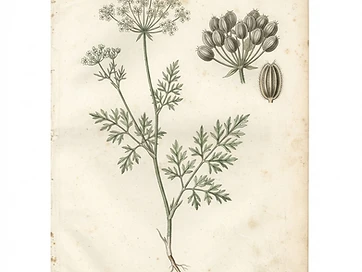
Pimpinella anisum
Anise
Apiaceae
Sweet, licorice-like, warm, aromatic


Foeniculum vulgare
Fennel
Apiaceae
Sweet, anise, licorice-like